HOBBY TO PRO – What Will You Sell?
Back in August, I gave you a list of 10 things to consider when deciding to turn your crafting hobby into a home-based business. Number 1 on that list was, “What Will You Sell?”. This month’s article is a little bit deeper dive into this subject.
First of all, when you are deciding to what to sell, try to find your “niche.” So, what is a niche? Here’s one definition that Google supplies:
- A specialized, focused segment of a broader market targeted at a small, specific group of customers. Example: A niche store that only sells vegan, gluten-free wedding cakes.
There are many coaches out there that will tell you that you need to pick a product and “niche down” to create something that is uniquely yours. I was pretty resistant to this advice because I figured that if I made something for everyone, I would have a lot more sales. The result of me not following this advice is shelves, drawers, and totes full of fabrics, trims, patterns, etc. of materials that I will never use but I kept saving “just-in-case” I needed them.
When I first started sewing, I jumped from thing-to-thing and thought I really wanted to sew this thing or that thing and I gathered all of the “stuff” I would need to make a gazillion of them and then as time went on, those gazillions of things just never really happened but all the “stuff” was still here. My Etsy shop went from selling miscellaneous crafty things like trinket boxes to crocheted baby booties, to pillowcase-style dresses made from Disney fabric, to almost-rebranding to sell custom children’s clothing and pageant dresses. Here’s my story of how I found MY niche.
So…there I was, deciding my niche would be fancy kids clothing and I went through an entire marketing class and was ready to re-brand my old Etsy shop (Devonchey Creations – created to just sell random crafty things) to my new kids boutique that would focus on girl’s fancy dresses and clothing and it would be called Lavender Chiffon. I spent a few months getting ready to launch a new collection that was called “Gold.” This collection was to launch before the holidays and all my marketing was going to be Christmas-focused with each outfit having some gold bling in it…trim, buttons, fabric, etc. The clothing I made was gorgeous and I sent it all out to a photographer that created a beautiful photo shoot using her daughter and a neighbor’s little boy as models. There were approximately 10 outfits that included some dresses, pants, tops, leggings, a boy’s vest and tie, and even a Christmas stocking that matched the beautiful Christmas fabric that I used in the boy’s items. I was serious…I knew what I wanted to sell…and I had a deadline.
And I was rushing…I was going to visit my daughter for Thanksgiving and I needed to be done and launched before I left. I followed my marketing coach’s plan to the letter and filed a press release announcing the launch of my new collection. Everything went live in my Etsy Shop and I happily got on a plane and flew away.
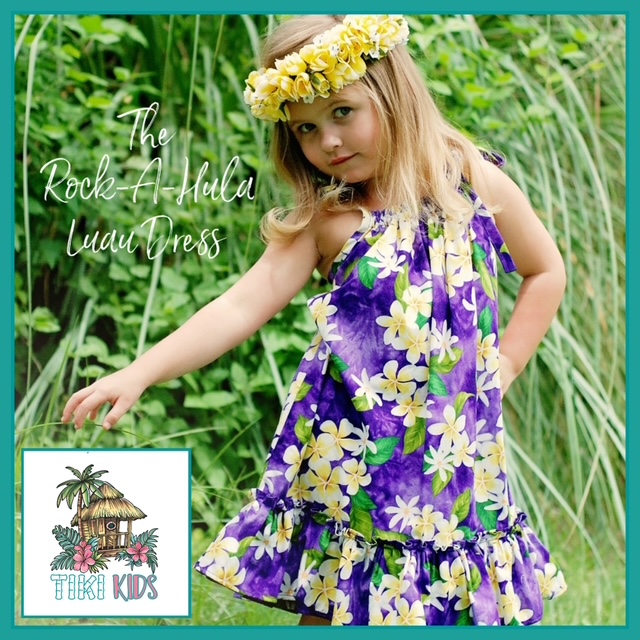
Now I need to take you back earlier that year to early spring. I collaborated with a momtographer and her 3 kids and we entered an Easter photo contest with the theme of “An Island-Style Easter.” Up until then, I hadn’t really been sewing much with tropical fabric, but I decided to use my pillowcase-style dress pattern, add skinny tie straps, put a ruffle on the bottom, and make a little girl’s dress using red and white classic Hawaiian print fabric. I liked the dress so much that I put it in my shop and it became my best-selling dress ever.
Another thing that was going on in the background…between the Luau dress creation and the Gold line launch, I was also making and selling that dress, along with matching items for moms, dads, and brothers…a lot of them! These items were all for sale in my Etsy Shop, along with crocheted baby things, pillowcase dresses, and trinket boxes. My shop was a mess…but I was going to rebrand it to Lavender Chiffon as soon as I got back from vacation, so I left it alone.
And speaking of vacations…there I was in San Diego with sales happening in my shop. I should have been happy, but I wasn’t. Every time I heard that little “cha-ching” sound your phone makes that notifies you of an Etsy sale, I cringed. I realized that I did not EVER want to make any of those gold items again. I was subconsciously wanting every sale to be for my little Luau Dress or a boy’s aloha shirt. And that’s when I knew what I really wanted to sew...my heart belonged to colorful, tropical print fabrics.
Did this experience prompt me to rebrand to Tiki Kids? Nope…I wasn’t done learning yet. I did take MOST of the other things out of my shop and began to focus on the tropical clothing, but I still couldn’t let go of the cutesy girly dresses. That fateful Thanksgiving trip happened back in 2016 and I still kept finding ways to focus on the frilly dresses and it took me until earlier this year to decide I needed to completely focus on my tropical kids clothing line. I finally rebranded my shop and built a website that focuses only on items made with tropical prints and caters mostly to children – girls, specifically.
So why should you find your own niche? If I had the sense to take the leap to rebrand and narrow my focus 10 years ago, I wouldn’t have spent so much time and money on things I ultimately wouldn’t need. I also wouldn’t be giving away fabrics and notions that I paid good money for. I would have a normal home with a sewing room instead of a sewing house where the only rooms without sewing supplies in them are the bathrooms and kitchen. (Or, I would still have a sewing house because I was very busy all of these years building my brand and I would have converted my house to a sweat shop, lol.)
What will your niche be? How will people find you? Who will you be competing for sales with? What will you do to stand out in that market that gets people’s attention? Here are some marketing hints. Let’s say you decide to sell hair scrunchies. Go search for hair scrunchies on Google and then click the shopping tab at the top of the screen and see what comes up. That’s your competition. What would you do to your scrunchie to make it stand out in that crowd. You need just one little thing that will make your scrunchie different than everyone else’s. That is your niche. Find a unique color or fabric or something different about it. Maybe you make it out of some unique fabric…try “garbage bag hair scrunchies.” I just made that up…maybe if you search for it someone else did it too? Make your item stand out from everyone else’s and that is your niche.
Let me know what you decide and if you found garbage bag hair scrunchies…maybe we can collaborate and create some!
Find me on Facebook at Sewing Pants & Coffee and friends:
www.facebook.com/groups/spacandfriends
Hobby To Pro – Licenses, Taxes and Selling Venues
Last month we talked about a few things you need to consider before you make the decision to start a home-based business in your home. I reread my article this morning as I was getting ready to elaborate some of the items and realized that most of my post sounded a little discouraging. I apologize for that, because the very last thing I wanted to do is to discourage you. However, if after you read that article and you STILL want to proceed with your home-based business…congratulations. I am very happy for you and I am available to answer any questions you may have.
Since this is a community-based website and newsletter, I will assume that you live in our community and tell you what I know about working here.
Do You Need A Business License?.
- I do not have (nor do I need) a business license where I live (Golden Shores). I can pretty much do what I want in my own home. I was told that, if there is a lot of traffic going in and out of my gates or crowding up the street, that might be an issue, but that would be up to my neighbors to complain if it gets out of hand. Other than that, there is no issue with having a business here in my home.
- You MAY need a business license for selling on-site in different cities, especially those that areincorporated. Some bigger craft shows require you to have one, but most don’t. There are temporary business licenses that you can get for special events, if you need one.
- If you live in a city that’s incorporated like Bullhead or Havasu, you will need to contact the city to see what their requirements are. If you are in an unincorporated area, like Fort Mohave, you are under the county’s regulations. If you are in another state like Needles or Laughlin, you will need input from both the states and the cities.
Do You Need Business Insurance?
Do you need business insurance…well, yes – probably. You want to insure your machines and inventory against fire, damage, or theft. If you only have 1 or 2 machines, your home-owners insurance will probably cover them. Once you get into having employees and customers in your home, you will probably also need liability insurance. You will have to decide what you need and then search for companies that can provide the specific insurance you need.
Do You Need To Pay Taxes?
- Do you have to charge and pay sales tax. The answer is yes…but there are exceptions.
- If you live in AZ and sell in AZ, then YES, you have to charge and pay AZ state sales tax. If you live in a city, you will also have to pay local taxes. There is just no way around this, legally.
- Getting a sales tax permit (or TPT license, as they are called here) has an added benefit – it allows you to buy your materials wholesale but be prepared to buy in bulk. I do buy some fabrics wholesale…pricing is cheaper, shipping costs suck, but it would be my preferred method of acquiring a large amount of fabric and the larger quantities purchased, the price per yard usually goes down. If you buy supplies in very small quantities at places like Hobby Lobby, dealing with getting your supplies tax-free may just not be worth it. The way I handle that is I just include the sales tax as part of my materials cost and leave it at that.
- If you sell online, this is a little different. If you live in AZ and sell out of state, in most cases you do NOT have to charge or pay sales tax. However, once your sales reach a specific amount (and this varies from state to state. If you have a website, you will have to be on top of the sales tax regulations and rules for each state and keep track of them. A lot of states have a very high threshold so it may never be an issue for a smaller business.
- If you sell on a Marketplace, like Etsy or Amazon, they will collect and pay the sales tax directly, so you don’t have to.
- Do you have to pay income tax on the profits of your home based business? Unfortunately, yes. If the IRS wants to tax you on the interest you made from your savings account last year, they will definitely want part of your income for your business. In fact, a self-employed individual will pay a larger percentage of taxes than someone who works for a company. Then there’s the good old self-employment tax. Owning a business is a double-edge sword…the more profitable you are, the more money the government wants. I advise you to check in to your local tax laws and regulations so you know exactly what you will be liable for.
Other Licenses & Certifications
Depending on your business and what you do or produce, you may need some type of specialty certifications, but that is probably rare.
Where to sell?
There are lots of places where you can sell your finished products, depending on what you make. If you have already been doing this for a while, you probably already have some people or places purchasing them. You may have started with friends, family, then friends of friends and family. Maybe you post your items on Facebook and sell locally. This is exactly how I started selling my items. I can’t tell you how many parking-lot meetups I did the first year or two of selling my dresses. In my case, I was still considering myself as having a hobby and I was having fun getting back into sewing. I used up all fabric scraps I had been carrying around with me for a few years. Once I decided that I was going to keep sewing, I realized I loved making little dresses but had no one to pass them on to (Grandma to 5 grandsons, here). So, I decided to sell them on Etsy, which is a marketplace.
So, what is the difference between a website and a marketplace?
A website is yours…you are responsible for everything that goes onto your website, you have to market your own products and drive people to your website to see your items and in that process you need to convince them to choose your product.
A marketplace is somewhere you would go to purchase a wide variety of different products. Imagine a huge building that houses many different stores. There are so many different types of products housed in there and there may be several vendors selling the same types of products. You visit that marketplace looking for an item you need and the algorithm of the marketplace decides whose items they are going to show you. Etsy and Amazon are marketplaces. Temu and Shein are marketplaces. Any website like these that I mention that gives individuals an opportunity to have a little mini website inside of their bigger one is a market place.
Other comparisons – the cost of selling on each of these.
Marketplaces have fees. These include listing fees, commission fees, merchant service fees, shipping fees, and misc. other fees. Websites usually have a hosting fee and merchant service fees. There also may be random charges for apps or updates. Fees will vary with each website or marketplace.
Other places to sell.
- Besides Facebook, social media has become the main place to market your creations. You can now also sell on Instagram, TikTok, and Pinterest, although Pinterest is more of a search engine than it is a social media platform.
- Craft shows and local markets are popular for local selling, especially in the fall.
- If you find local area boutiques, you may be able to sell your products to the boutique or they may let you display your items there for a percentage of your sale.
- There are also small marketplaces that operate a lot like a swap meet or craft fair. For a monthly fee, you can set up inside and sell your items on certain days of the month. We have a couple of these in and around Fort Mohave and Bullhead City, so I encourage you to take advantage of these small markets.
I will leave you with the offer to pick my brain about anything you have read here or if you have any questions. Hit me up via email or on Facebook and we can schedule a time to talk.
NOTE: As you grow and expand your business, remember this saying: DON’T PUT ALL OF YOUR EGGS IN ONE BASKET. What this means in the sewing/crafting world…it’s good to sell in different places because you never know when one sales channel will disappear for whatever reason. The entire site could shut down or go out of business, or some unforeseen event could happen (like a pandemic) that could shut down a brick-and-mortar store with no notice. Get your main choice of sales channels up and running then expand so you don’t have to rely on only one source of income.
Good luck and happy sewing until next month.
If you have any questions about any of the items I have mentioned, feel free to email me at denise@tikikids.com.
Check out: Etsy.com and Shopify.com
HOBBY TO PRO
Do you want to turn your sewing or craft hobby into a business? Here are 10 things you need to do to make sure it’s right for you.
The following suggestions will be for a sewing-based business and examples shown will be from my point-of-view because that’s what I know. You can adapt each of these suggestions to your own craft, however.
Here are some things to consider before you start.
1. What Will You Sell? If you have already been selling some of your creations, then you are ahead of everyone else. You know people want your products and you know who is buying them. If you have no clue what you want to make and sell, then you will have a much more difficult time with this process. This article is going to be about what you do after you make this decision, so this part is all on you.
2. Check out your local requirements. Most communities don’t have any rules or regulations for those of us who sew to sell in our own homes. You still may need a business license and sales tax permit, even if you are working from home. Check your local city, state, and county requirements and maybe even your HOA rules if you live in one.
3. Make sure you really love what you do. Once you get started, you may be making hundreds of one item, over and over and over. Are you going to want to do that? If not, make sure to pattern your business around this so you don’t burn out.
4. Charge for what you do and make sure it’s enough that it helps with the burn-out that comes from reproducing the same items all of the time. You also will have items you don’t mind making and some others that you hate making. If you absolutely detest making a specific item, charge more or just take it out of your shop.
5. Find a platform you want to sell on. Will you sell it on a marketplace like Etsy or Amazon? Or maybe you want a website or maybe you want to sell locally. All of these platforms require a slightly different business model, especially selling locally. Just remember that you will need to drive your own traffic to your platform…customers will need help finding you.
Now that you are ready to begin, here are some other things to consider that you may not have thought about and what you might come across after you start.
6. How does your family feel about you starting a business from home? Will they be supportive or will they resent it? Do you have toddlers that will interrupt you or will your husband complain that dinner isn’t ready because you have a rush order to get out? This is important to know ahead of time because your lives and your home will change.
7. Having a dedicated space is VERY important. Here is an example. If you have to pull your sewing machine out of a closet to create an order and then pack it all back up when you are done, it will be a deterrent to your business. Find a space where you can leave it out and ready to go. I once sewed on 2 tv trays in my bedroom. I had a sewing bench that had a folding top where most of my supplies were, but my cutting mat was behind a door and there were two boxes in my closet that held fabrics and other supplies. I was NOT sewing to sell at this time, but I did do a lot of sewing, and I have moved around a lot and several places I lived had no space to leave a machine setting out and I just didn’t sew much when I had to move it around.
8. Be dedicated and consistent. You will have deadlines because your customers have deadlines. You will be sewing when you are sick and missing your kids’ games and recitals and other important events. Take that into consideration when you accept an order. Sometimes the only sewing time you have is when everyone else is sleeping…you will lose sleep.
9. Don’t listen to negativity. You will have friends and relatives that think your business is cute…until they don’t get stuff for free. They will think you are going through a phase and will say things to make you doubt yourself. Don’t give up.
10. Don’t give up. It takes time for a handmade business to get off the ground. You may see someone online that is making a lot of money selling hairbows or embroidered t-shirts or something totally different. It feels like they just started and showed up and instantly became successful, and that does sometimes happen. But the truth is usually that they have been doing it for years and it’s finally paying off.
If you have been considering turning your special hobby into a business, I hope these 10 suggestions have helped you. If you have any questions about any of the items I have mentioned, feel free to email me at denise@tikikids.com.
AI…Love It Or Hate It?
Each time a new technological development takes hold we kind of hold our breath to see where it’s going to go. Do we like what it does or does it scare us. Will it make life easier or more complicated. Do we have to learn something new, or will it be a flash-in-the-pan and disappear and go the way of 8-track tapes, VCRs, and car phones? Remember when our parents or grandparents refused to leave messages on someone’s answering machine because it was just weird? Did answering machines go away or do those same people now leave messages?
Well, I’m a little older than most of you reading this, but I have always loved technology and the cool things that people invent and develop. Although I’m still waiting for rap music to go the way of rock-and-roll and boy bands, I usually can’t wait for the next new thing. But AI is different…I’m actually kind of afraid of it.
Why am I afraid of AI? Well, it’s just too good and, before the world settles down and gets used to it, lots of rules, laws, regulations, and compliance issues are going to come up…it’s already happening. Laws are being passed that will require you to disclose your use of AI and that’s just the beginning of what’s going to happen.
AI is so good that people are going to very easily start using it for not so good things (as I’m sure they already are). I was on the bandwagon with all the people wanting to ban it…it was just too scary for my mind to conceive. For example, my daughter uses ChatGPT like I use Google and I was constantly complaining to her about it…”how do you know what it tells you is true?” Since AI supposedly pulls info from everywhere and with all of the fake news stories, fabrications, and exaggerations floating around out there, how do you know it’s getting you the correct information? Well, you don’t really – so let’s just go ask Google, instead. Right??
Well, guess …GOOGLE IS AI! When did this happen? Yes, go ahead and laugh at me but it suddenly dawned on me that I was asking AI questions and had been for a few years, just not conceiving that Google went the AI route about 2020 and was no longer a keyword-based search engine. Now here’s my dilemma…I didn’t WANT to use AI, but it seems I had no choice. Google, at the very least, was forcing me to use it and I wasn’t happy about it. I DIDN’T WANT TO LIKE AI!
But then something happened and now I’m a convert. My neighbor, who loves to play around with anything new that comes out, sent me an image she created with ChatGPT. She pulled one little photo off my Facebook page of a matching sibling outfit and put it on models! When I saw this, my back-brain (creative part) shot out an idea spark and zapped the rest of my brain, and I became an instant convert. No more hiring models or trading free products for photos that I may never get or may not be able to use for one reason or another. No more crappy photos or searching for a substitute for a tropical background. My business model, that hadn’t been working for me for a few years, was about to be replaced by AI.
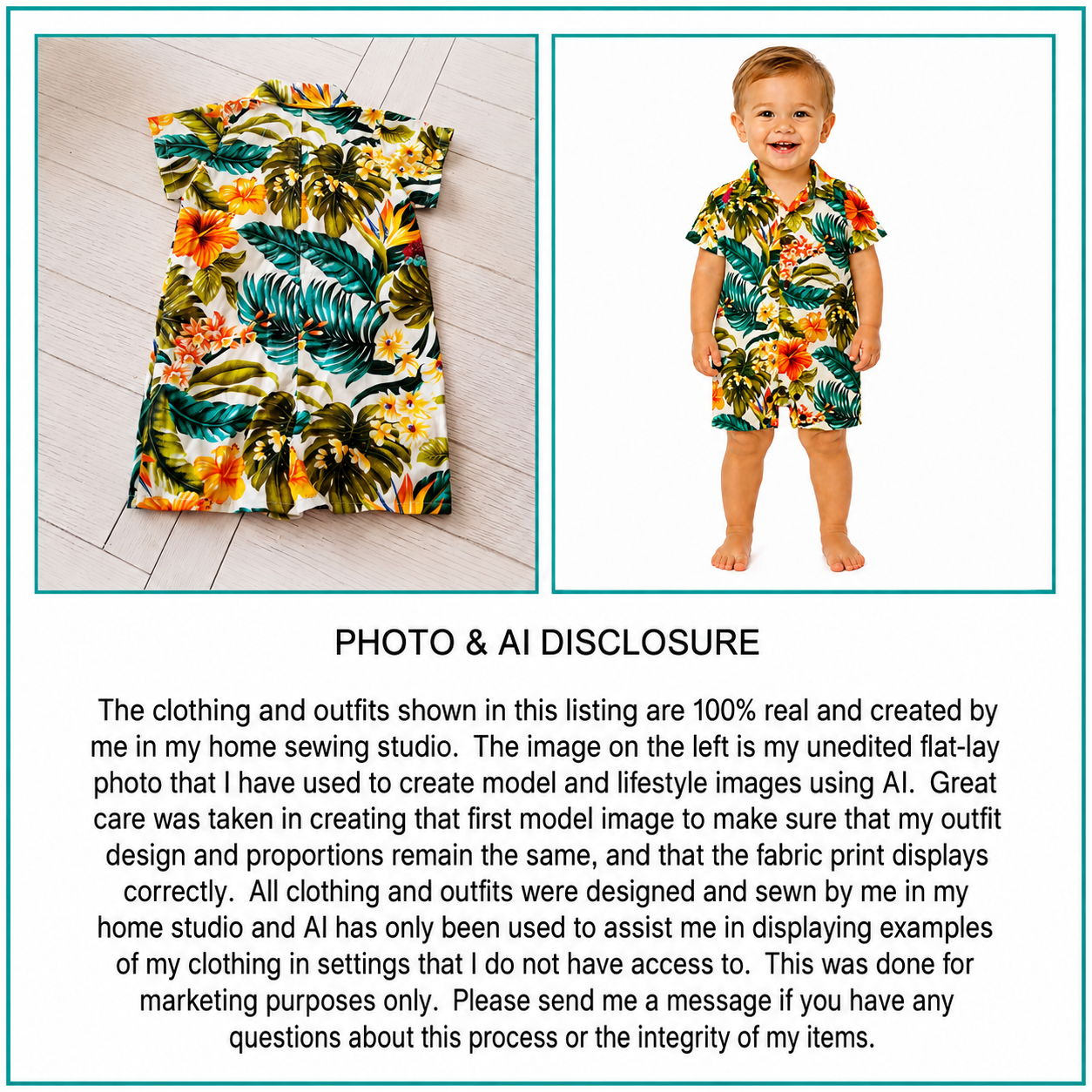
Yes, I still make the things and take the original photos myself, but I now use AI to model them and place them in the perfect tropical settings that I don’t have access to here in the desert. For me, AI is here to stay and for the rest of the world, as well, but I believe it will be highly regulated in the future. I just hope I can keep my business plan going – I already have begun adding AI disclosures to my product listings (I finally have a use for the bad photos I take on my dining room table).
Here’s an example of how I have been using AI. The disclosure on the left shows my dining room table photo of my product…no filters. The image next to it is how it looks on the model and a white background. Once this image is to my liking (proportions, length, design, etc. is correct, I have it put on a standing, front-facing model on a white background and it becomes the standard for this product. Then the fun with the backgrounds and lifestyle photos begin.

By the time you read this article, my website will have been rebranded and up and running and you may have seen some marketing images bouncing around some of our local Facebook groups. It is a little different than you might expect a children’s online boutique to be, so come and check it out at www.tikikids.com and get an inside look at my back brain at work.
You can contact me at: denise@tikikids.com
THE CIRCLE-OF-SEWING-LIFE
[What is an “indie” pattern, where do you find them, and how to train your Facebook feed to show them to you.]
It all starts with an idea. Maybe you dream about it…or maybe you see something that inspires you. Sometimes the perfect fabric will inspire an idea, but my main trigger is a new sewing pattern that I see pop up on my Facebook feed.
First, let’s talk briefly about the types of patterns you can purchase. There are 2 types that I purchase. First, traditional tissue patterns from the big 4 pattern companies are probably what most of us think of when we talk about sewing patterns. The recent Joanne’s liquidation also prompted a sale that affected the ownership of the rights and assets of the big 4 pattern brands that scared a lot of us with the possibility of future production of these patterns completely stopping. Fortunately, it appears that will not be the case, and we will actually benefit from this sale with an overall modernization that will include more PDF pattern offerings, which makes me extremely happy because I HATE TISSUE PATTERNS!
Speaking of PDF patterns, let’s talk about the second type of patterns you can purchase, which are indie patterns . Indie, in this case, refers to “independent” pattern companies. I LOVE INDIE PATTERNS! When you purchase an indie pattern, you receive a file that you can download to your computer and print in the comfort of your own home. I discovered indie pattern companies about the time I started to sew and sell. The person who brought this idea to life created a concept that has been developed and expanded on over the years. I love this pattern format so much that it’s hard for me to purchase a tissue pattern now. The only downside is you have to print the pieces on letter-sized paper and tape them together. The major upside is that you have all of the sizes in one place and you can print and reprint and it costs you nothing extra. Since I don’t like tracing, this is my preferred pattern format and I find the process of assembling a paper pattern relaxing. There is a whole lot more to this concept that I will dedicate an entire article to in the future. Just know that for the remainder of this article, the patterns I will be referring to are all indie patterns
So how do I find new patterns and designs for my TIKI KIDS island-style clothing brand? For the most part, they find me. They just pop right up on my Facebook feed…pattern after pattern after pattern. Because of the content that I actively participate in and click on, I have trained my Facebook feed to show me all things sewing related (and cats…lots and lots of cats…lol). This was not a training I did on purpose – it just happened over the course of a couple of decades. All it takes is one click on a pattern ad and you now have entered the circle-of-sewing life. When you click and purchase, they get your email address (because, sure…you want to see more cute patterns popping up in your email) and pretty soon you will be the proud owner of more PDF sewing patterns than you will ever be able to sew.
I have to admit that I purchased a lot of sewing patterns back in the early stages of my sewing career when I had no direction or style or idea of where I wanted to go with my brand. If it was frilly and cute, I bought it. Now that I have a solid brand and a definite niche, I’m usually only inspired by the styles and designs that I can possibly use to add to my vision of where I want my business to go.
So what inspires me to click on a pattern for more info? Here are the features I am attracted to:
- Baby or girls’ dresses or tops with unique features
- Patterns with versatility (more than one option)
- Ruffles and straps
- Sleeved and sleeveless options
- Gathered skirts and lined bodices
- Open strappy backs
If the pattern meets some of these options, I will click on it to go to the next level and look to see what type of fabric it was designed for – knits or wovens. If it’s knits, it’s an immediate exit (not in my brand at this moment). If it’s wovens I keep going. Next, I look at size ranges to see if they fit with my brand (needs to be consistent with other items). Lastly, I look at the line drawings because that’s where you look to see the detail of the pattern design without the fabric design interfering. This is where I decide if the features of this particular pattern will add anything to what I already own. An important question that I ask myself is, do I already have a similar pattern in my files that I can use to get the desired outcome of whatever idea this new pattern is inspiring in my brain. Sometimes (often), the answer is yes and I pass on the purchase.
Now that I have the pattern, what do I do with it next? I will tell you that I seldom make a pattern exactly how it is designed. I use pieces of one and parts of another and some items I create don’t have a physical pattern…just measurements. I have one dress that has a basic design that I have created five different dresses/outfits from. I mix and match sleeves, bodices, skirts, pockets, collars, etc., to come up with ideas to make it look different. This is my favorite part of my job. Sketch me a design and I can use my pattern files to find features of different ones to combine to make you what you want. I have been known to purchase a pattern just for a specific sleeve style and I once bought one to get a specific headband pattern.
If you would like to follow along with my creative process, find me on Facebook and send me a friend request or click the link here to go to Sewing Pants & Coffee and Friends and join my group. I hope you enjoy the photo of my newest item, the Azure Bay Sunsuit, that you can find in my recently rebranded Etsy shop, Tiki Kids Handmade

The Great Seamstress Touch:
Like many in Topock/Golden Shores, I moved here right after I retired. For some, the beginning of retirement is an opportunity to rethink our lives and a new beginning to start anything new that we always wanted to do when we didn’t have time. In my case, it was sewing.
I bought a sewing machine, but when I opened the box, I realized I had no idea what to do with it. I plugged it to the wall, and nothing worked. I went on YouTube to try to trouble shoot because I knew I was doing something wrong. I called my mother overseas and tried to show my new machine to her on the video call. Nothing worked. It was too late to return it to the store I bought, because the procrastinator here took several months to even open the box. I was thinking that it was a sign that sewing was not for me.
Well… I went on Facebook and I asked if anyone knew a person with experience in sewing machines. Someone very helpful contacted me. I told her about my frustration, and she offered to help me. I took my sewing machine to her house, I conversed with her cats, we chatted a little and in a matter of seconds my machine was working again! What was wrong with it? I don’t know. The sewing machine refused to work with me and only worked with Denise!
Since then, I never had a problem with my sewing machine again, but I can say with conviction: If you ever get tangled with your sewing, Denise has the magic touch.
For her readers, she will be back next month. Thank you for your understanding.
Edna Moreno Turner.
LEARNING TO SEW
This month’s article includes:
- April LITTLE PRIZE CONTEST
- Local happenings that are sewing related
- Monthly challenge in our Facebook group (Learn To Sew Lesson #1 is coming soon)
- Hobby-to-pro tip #1
Scroll down to see more info about these topics.
NOTE: Some items in this article are linked to my Facebook group, so please join to get the full benefit.
Link: Join My Facebook Group click here, Sewing Pants & Coffee and friends
April Little Prize Contest
We had no winners for the March little prize contest so our prize will carry over to April. All you have to do is find the misspelled word and be the first to post in our Facebook Group. The contest is easy…just read this entire post and find the misspelled word. To win, pop over to my Facebook group and be the first to post the misspelled word and to see what the prize is. No one found the misspelled word in March…let’s try again in April. The winner this month gets a Spunge Bob lined zipper pouch with some surprise sewing tools inside.
Local Happening – Let’s Sew!
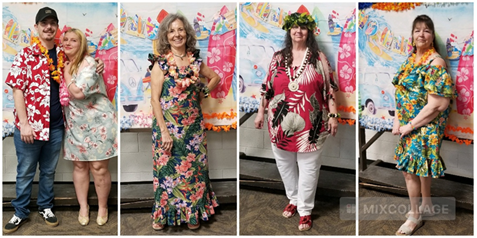
On March 28, the Golden Shores Women’s Club hosted its luau-themed DESSERT AUCTION. We had a wonderful time and I sewed 6 Hawaiian-themed items for the event. I even sewed something for myself to wear, which I haven’t done since sometime before 1984! Since island-style fabric is my #1 love, I had a great time making all 1 top, 4 dresses, and 1 shirt. Here are a few of my creations:
April Challenge
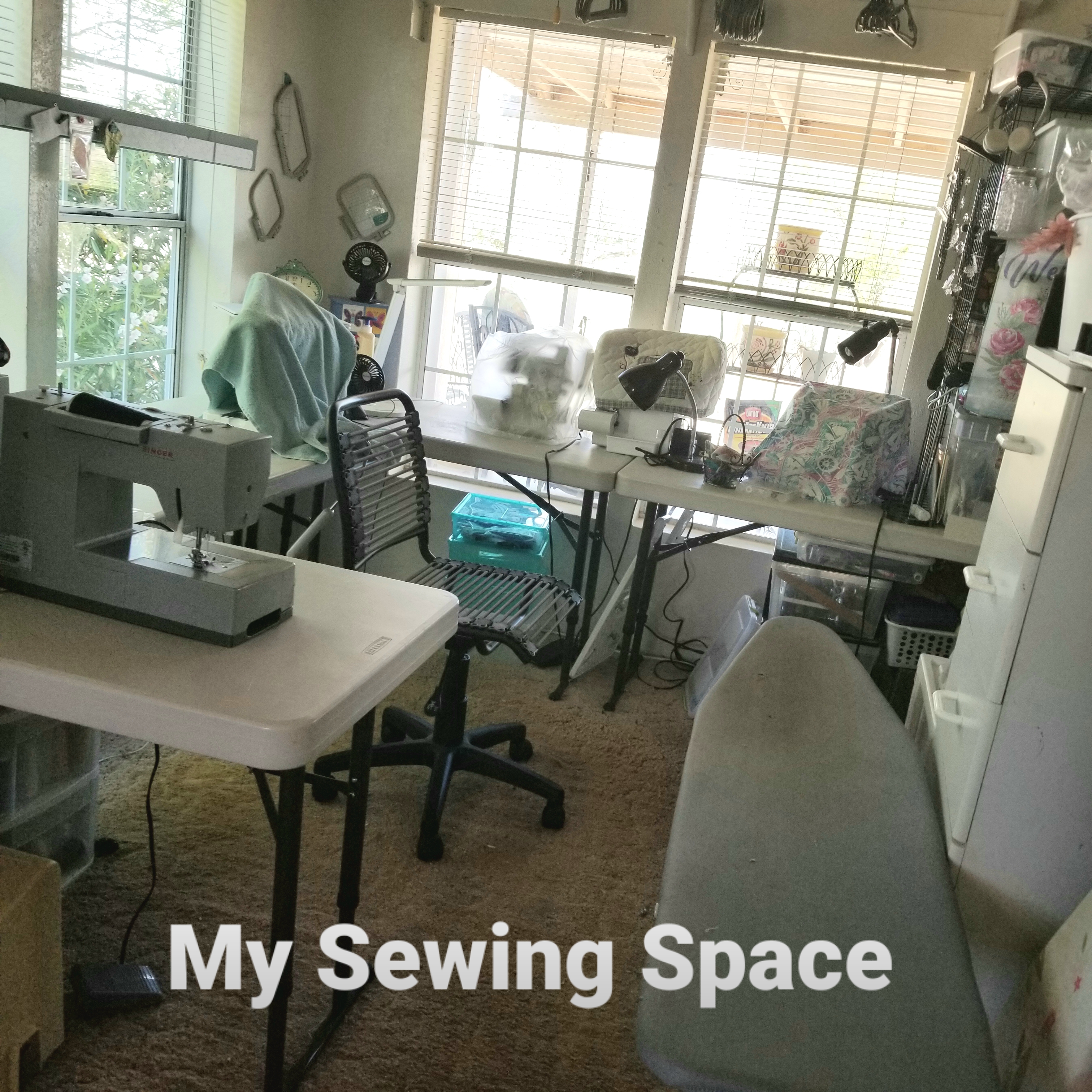
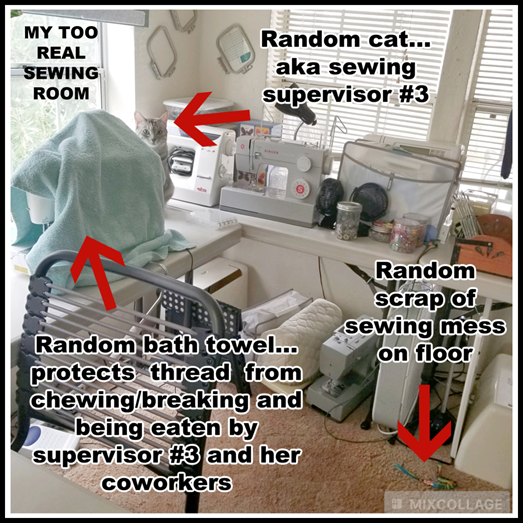
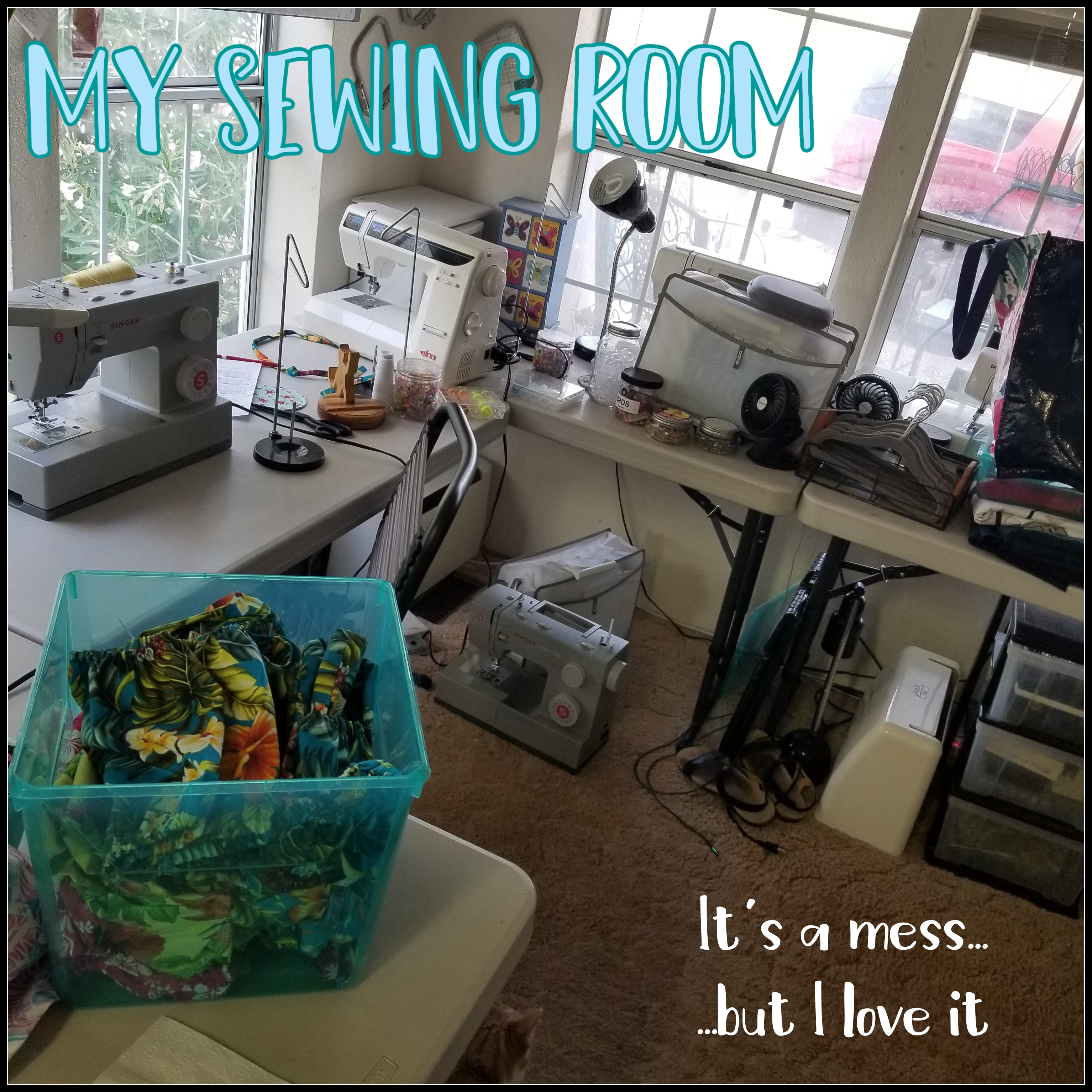
Do you have a dedicated sewing room? If so, post a picture in the pinned post in our Facebook Group. Online sewing lessons start in April…make sure you are already a member of my group before then. If you are local, please feel free to join us at my home on Saturdays from 10-12.
Here’s where you go to post here
We are going to sew together in this group, so join now to make sure you are there when our on-line sewing adventures begin. Other benefits to joining…specials, pre-orders, games, sloppy sewing tips, machine reviews, sewing tool demos, cute cat sewing supurrvisor (intentionally misspelled) pics, hobby- to-pro tips, and more.
Sewing lesson #1 is coming soon…I will be posting a list of items you need to get started (in addition to a sewing machine) over in my Facebook (link to join is at the bottom).
Hobby-To-Pro Tip #2
If you’re thinking about turning your sewing hobby into a business, there are quite a few things you need to think about. Here is tip #2:
Have a dedicated place for your sewing machine
This may be hard to do if you live in a small space, but if you are sewing to sell, you will probably have deadlines to make and it’s a pain to pull that machine out and set it on the dining room table and either work around it when it’s time for dinner or pack it back up if you are not finished.
Think outside the box and try to figure out a compromise of some sort. In an apartment I once lived in, I had 2 wooden tv trays for my machine in a space next to my bed and a sewing stool with a tray and large storage compartment that I sat on. My sewing tools were in the tray and my projects were inside the stool. I didn’t have a lot of fabric and other equipment at that time, but any overflow went into a tote that was in my closet. I also had a cardboard fold-up mat that I spread out on the bed to cut on (this was back in the day when we all weren’t using rotary blades and cutting mats).
Visit your local thrift stores to find items you can use for your dedicated sewing space.
Thanks for reading my article and I hope to see you in my Facebook group. You can join or visit by clicking here
Past months articles
This month’s article includes:
- March little prize contest
- Local happenings that are sewing related
- Monthly challenge in our Facebook group (Learn To Sew Lesson #1 is coming soon)
- Hobby-to-pro tip #1
Scroll down to see more info about these topics.
NOTE: Some items in this article are linked to my Facebook group, so please join to get the full benefit.
March Little Prize Contest
The contest is easy…just read this entire post and find the misspelled word. To win, pop over to my Facebook group and be the first to post the misspelled word and to see what the prize is. The link to my group is at the end of the article.
Local Happening – Let’s Sew!
Let’s start with our local sewing-related event. On March 28, the Golden Shores Women’s Club will be hosting its annual DESSERT AUCTION and this year it’s a LUAU theme. Why am I excited about this? Because sewing with tropical print fabric is my true love and I’m making Hawaiian dresses for some of you ladies out there. For $40 and the cost of fabric, you will have your own unique Hawaiian themed dress to wear to the luau. Don’t wait too long to order, though – time is getting short and the cut off to get in on the fun is Friday, March 6, and I can only make a few dresses. If you are interested in having a dress (or Hawaiian Shirt) made, please contact me at 936-402-6021. If you want to make your own dress or shirt and need help, feel free to hit me up with questions about fabric or patterns or anything sewing related. PS – there is a costume contest, so dress up!
March Challenge
In February, I challenged you to learn to sew, to pull out your machines, pop over to my Facebook Group, and tell me your sewing story, and, if you didn’t have a story or a machine, to just let me know you are interested and want to start on your own sewing journey.
For March, I want you to take a picture of your sewing machine sitting right where it is now (closet, garage, buried under a pile of whatever it’s buried under, or sitting in the space you use it). If you don’t have a machine, take a pic of where it might go when you get it.
Here’s where you go to post by clicking here
We are going to sew together in this group, so join now to make sure you are there when our on-line sewing adventures begin. Other benefits to joining…specials, pre-orders, games, sloppy sewing tips, machine reviews, sewing tool demos, cute cat sewing supurrvisor (intentionally misspelled) pics, hobby- to-pro tips, and more.
Sewing lesson #1 is coming soon…I will be posting a list of items you need to get started (in addition to a sewing machine) over in my Facebook (link to join is at the bottom).
Hobby-To-Pro Tip #1
If you’re thinking about turning your sewing hobby into a business, there are quite a few things you need to think about. Here is the most important thing:
Make sure you love what you do and what you make.
Let’s use baby diaper covers with a matching elastic hair bow as an example. You make a few of these for your baby girl and then family and friends start asking you to make some for them. They encourage you to start selling them, so you open an Etsy shop. You make a few sets from some left-over fabric and post them in your shop, and you sell a few. That was fun and easy, so you buy a few more yards of fabric and make some more and list those. You start having regular sales and start thinking about how many you can make a day and decide that a 3-day processing time will work just fine and you can easily make a couple dozen sets in those 3 days and you are happy.
Everything is good and your sales become more regular and then it happens…someone posts something somewhere showing off your diaper cover sets and their post goes viral, and you wake up to 150 orders that you have now promised to ship in 3 days. For the purpose of this post, we will asume you have enough supplies on hand to make them, but what do you do about the time?
However you work out this problem, I guarantee that you will be sick of the pattern, the fabric, and all of the time you are going to expend trying to get those orders done. THIS IS WHY YOU MUST LOVE WHAT YOU MAKE AND THE PROCESS OF MAKING THEM.
Thanks for reading my March article and I hope to see you in my Facebook group. You can join or visit by clicking here
How To Get Started
My goal for the rest of the time I have on this earth, is to spread the joy of sewing and creating. I want to teach and help all of those who are interested in learning how to sew and/or to help expand their sewing skills.
How To Get Started
Read my story then check out the challenge at the end to begin a new journey in sewing!
How I Learned To Sew
Back in the day there were a few different ways to learn how to sew.
- You grew up around people who sewed and just kind of absorbed it.
- You were coached by a relative or friend.
- You learned in a class setting, usually Home Ec at school or maybe a class at a church or fabric store.
- You had a machine in your household and decided to sit down and figure it out on your own.
In my case, I watched my grandma make clothing as an elementary-school aged kid then, as a teen, I watched a neighbor make costumes for her dance troup. Also, as a kid, I hand-sewed dresses for my Barbies, but my first real pattern attempt was for a doll gifted to me that came with a pattern when I was about 8 years old. My mom gave me an old dress my sister had outgrown, and I cut that up, followed the pattern directions, and hand-sewed that doll dress all by myself. It wasn’t perfect and the collar pieces were not quite in the right places, but I remember looking at it and thinking, “Oh...that’s why the directions said that!”
My second attempt with a pattern was when I needed a maxi dress to wear to a luau. I purchased the pattern and fabric and cut and sewed that dress completely by hand. I had an aunt who then took pity on me and loaned me an old Singer sewing machine in a cabinet that had nothing but a straight forward stitch and that’s where my machine sewing started. When I was a senior in high school in 1973, I had a job and I took my first tax return ever and bought a brand-new Kenmore that had 7 stitches on it. I learned to use every single one of those stitches and kept that machine until 1977 when I upgraded to a new Kenmore with 3 boxes of accessories and cams and a lot more stitches...I still have that machine, it still runs, and it’s older than 2 of my children.
The decision to learn how to sew can come from many different places. You may have ripped your favorite jeans and need to mend them. You may need to shorten or lengthen a dress. Or maybe you need a Halloween costume or you want to make new curtains for your home. There are many reasons for wanting to learn how to sew and it’s a great skill to have and the joy of creating something with your hands is a very rewarding one.
FEBRUARY CHALLENGE!
So...I am going to challenge everyone who reads this article to learn to sew. Pull out those old machines that have been sitting around gathering dust. If you don’t know how to use it, it’s okay. Pull it out, dust it off, and come and join me in my Facebook Group, SEWING PANTS & COFFEE and friends (link will be below). Just let me know you’re there and tell me your sewing story. If you don’t have a machine OR a story, it’s okay...just tell me you’re interested in starting your sewing journey and hang out for learning opportunities and fun!
Join me on Facebook at Visit Facebook Group where I will attempt to document my journey to recovery and any sewing workarounds…because you just never know when you might need one of my workarounds for yourself.
Well I started the 2025 Holiday season out with a bang. The Friday before Thanksgiving, I stepped outside with a bunch of fully-packed Operation Christmas Child shoeboxes and I tripped and fell. What started out as an almost probable surgery to reattach the ball of my humerus bone to the rest of my arm turned in to a mini miracle. In the 12 days I waited to be seen by a specialist, the bone pieces that were about 3” apart on my ER xray were back together, so no surgery as of this date but a really long healing period of about 6 months.
As of today, the bone seems to be healing well, but I fear there are issues with the damage done to muscles, tendons, and ligaments. Pain is much reduced, but I still can’t use my right hand to do my hair, open jars, or even pet my cats. I can use my hand at about waist level, but there is no strength there. And I can’t climb up in my car, let alone start it or shift it.
So what am I going to do??? I’m finding workarounds for some things, but here is the scary part…I CAN’T SEW! I need both hands to operate my machine and guide the fabric and I can’t lift my dominant hand up enough even get it on the table, let alone use it for anything important. I have a friend that has been so much help…she has cut and prepped an entire wholesale order for me and has even serged the ruffle and skirt pieces together.
Tomorrow, things are changing…my friend is leaving for the holidays and I will be on my own. It’s been 4 weeks and 2 days since my accident, so it’s time for me to figure out how to get back to work! I have found workarounds for quite a few things so I’m confident I will be sewing this week!
Join me on Facebook at Visit Facebook Group where I will attempt to document my journey to recovery and any sewing workarounds…because you just never know when you might need one of my workarounds for yourself.
My sewing life started around 8 years old when I began hand-sewing crude dresses for my Barbie dolls. Then, in about 4th grade, I was given a Charmin’ Chatty doll for Christmas that came with a real tissue sewing pattern. My mom donated one of my sister’s old baby dresses and I cut it up and used the pattern to make my first ever structured garment. It had a skirt, some kind of sleeves, a collar, and a facing with snaps down the back. Was it perfect? Of course not! I remember struggling with the collar and facing and deciding that the instructions must be wrong and doing it my own way (story of my life). The collar was not quite right, but I was happy and it was the beginning of learning how to follow a pattern.
All my doll clothes were sewn by hand…with a good old-fashioned needle and spool of thread and everything I sewed up until I was 15 was by hand. I even made myself a dress completely by hand. That was when my aunt took pity on me and loaned me a sewing machine. It was an old Singer in a cabinet that only sewed a straight forward stitch. I was in heaven and started sewing all of my own clothes. I was learning to sew by following the pattern instructions.
My senior year in high school I saved up a little money and headed to Sears and purchased my first sewing machine. It was a Kenmore machine in a cabinet and had 7 stitches (I was so excited to have a reverse stitch and to be able to zig zag and make buttonholes). In 1977 I had outgrown that machine, so I upgraded to a new Kenmore that had tons of attachments, an entire box of cams, and a monogramming attachment. That machine saw me through making clothing for myself and my family, through many dance costumes, lots of home décor and gifts, and it still sits on the table in my sewing room. Although she is no longer my primary machine, she is the one I started my business with and still gets used when I need a heavy-duty machine that can sew through many layers or heavy fabrics.
I could go on about my sewing past, but sewing has basically been a well-loved hobby that has turned into my profession. So how did I learn to sew? I had no teacher and no one to ask advice from. My nearest sewing mentor was my grandma, and she lived in another state. I was on my own. Thank goodness for sewing machine manuals and sewing pattern instructions.
As far as learning to work a sewing machine, I didn’t have much to learn. I don’t recall anyone teaching me how to thread my aunt’s machine, so it probably came threaded and I just memorized that. The only adjustments would have been the tension and the stitch length, so there wasn’t much to learn. My Kenmore machines came with manuals, so I just followed them when needed. Once you have sewn on a few different machines, they are usually pretty easy to figure out, especially the Kenmores.
Learning to actually sew, however, kind of just happened. I learned all of the sewing techniques I needed to know for each item I sewed, using the pattern instructions. I have heard people say that the instructions are difficult and hard to follow, but I didn’t find that. Still, lots of people struggle with them and maybe they are more confusing today than they were back when I was learning.
So where do you go today, if you want to learn how to sew? You used to be able to get lessons in high school and college, but I haven’t seen those kinds of classes offered any more. Michaels, Joannes, and other fabric stores used to offer classes but independent fabric stores and Joannes, along with most fabric franchises have disappeared. I have seen random quilt shops here and there that will refer people to outside sewing instructors, but they are few and far between. And you can still go it on your own, like I did, but I was lucky that my sewing journey started with a straight forward stitch and that I was very stubborn and determined to learn from the pattern instructions.
If you have a desire to sew, I urge you to reach out and find an instructor…check with your aunts and grandparents or a local craft or hobby shop (ask if they have a bulletin board). And if you are local or close to the Golden Shores area, give me a call. I offer sewing classes to children (beginning at about age 8) through adults. Most classes are private and are taught on a boutique lesson basis. This just means that you choose what you need or want to learn. Need to start from the beginning and don’t even have a machine yet? That’s just fine…you can learn on one of mine until you can get your own. Already know how to sew and just need to brush up – we can do that. Just want to learn how to make buttonholes or sew in a zipper – we can do that, too. New machine and want help learning to use it…I can help you. Come and join me and let’s start a sewing revolution.
See my ad here on the website or contact me for more information. Tell me what you want to learn and I will make a lesson plan for you.
Happy sewing!
Denise
Join me on Facebook at Visit Facebook Group where I will soon be posting learn-to-sew information and details about my new Infinity Dress Pattern.
How to contact me:
Email: denise@devoncheycreations.com
Phone: 936-402-6021 (or text)
Last month’s article
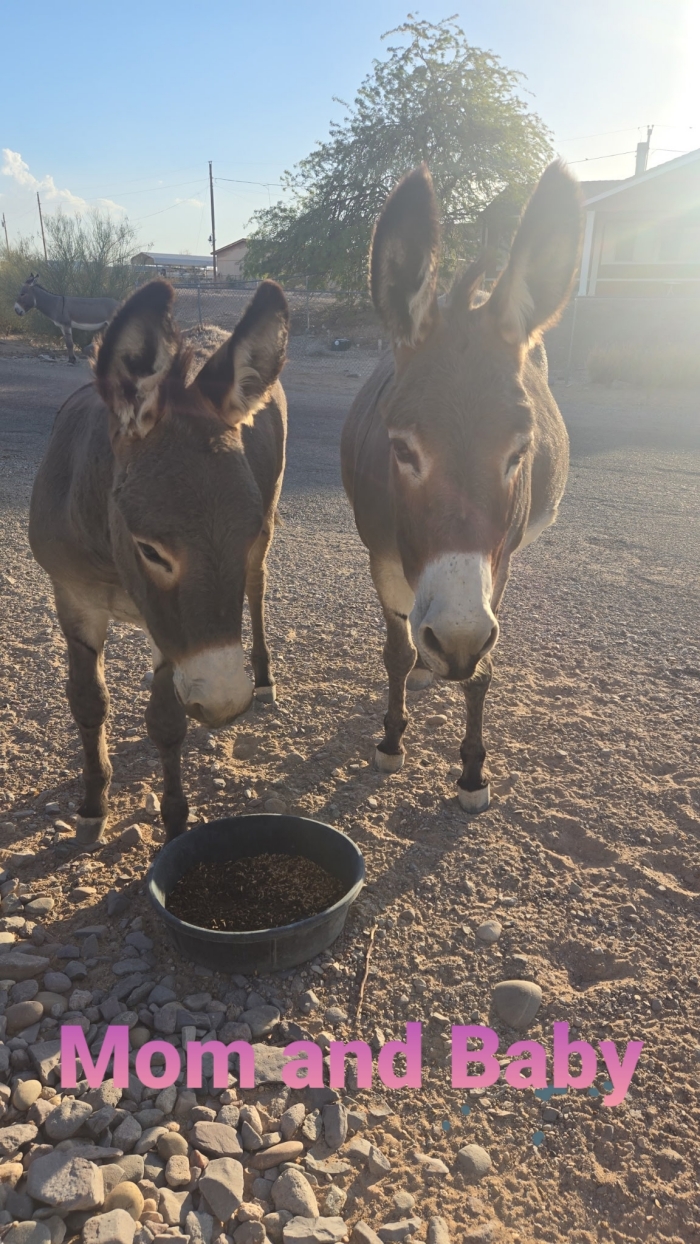
I have a routine I do every morning...wake up, hit the bathroom and do whatever has to happen in there, get dressed in my sewing pants, make my bed, pay attention to whatever cats decide to greet me in the bathroom, turn the bedroom fans off, head down the hall to the other end of the house where the kitchen is and maybe throw in a load of laundry on the way. Then I feed the cats, give them fresh water, make coffee, and do what I need in the kitchen. After that I head either to the sewing room or to the dining room table where I usually pull out my laptop and open the blinds. Well, today was table day...imagine my surprise when I opened the blinds and a donkey was casually walking by...just munching on a mouthful of weeds (they must be desperate).
So, I quickly threw on my shoes, grabbed my phone, and headed outside to try to get a pic so I would have proof, but then there were 2! Now, here is where it gets kind of scary...they both came running straight towards me! Since I recognized these 2 because our street has adopted them and I knew they were friendly, I only peed my pants a little (just kidding) and didn't take off running myself. Since this is a mother/son pair and the baby was right up on me and I'm a strange human to them, I didn't know what mama was going to do. These crazy donkeys stopped right in front of me and just stared at me. I gave the baby a few pets, switched to the mama, got a nudge and a love bite from the baby (that was scary) then they trotted out my gate and moved on to the next house. I figured they expected me to feed them, but since I was too unnerved to even consider that, they gladly left my property..
So…what does this have to do with sewing, you ask? Absolutely nothing, except for the wildlife I get to see outside of my windows every day, no matter where I sit. It’s usually quail, doves, more rabbits than you might expect, some squirrely chipmunk creatures, roadrunners, hummingbirds, and don’t forget the donkeys and my inside companions, my 3 domestic shorthair sewing supervisors. I am truly blessed to live here is this beautiful desert!
My photo that I took was pretty blurry, so I’m posting photos provided by a friend…we call the little guy, Harry. Photo credit goes to Melinda Muehlhausen (she’s awesome, by the way).

Three years ago, I saw a little blurb in our monthly Topock Topics newsletter about a church sewing group that was looking for volunteers to sew dresses for needy kids. I pulled out my sewing machine travel case on wheels and loaded up a machine and all of the goodies I needed for sewing and headed out to Golden Shores Baptist Church. When I walked into their fellowship hall, there was only one person there and she was setting up fabric and supplies and getting ready for a 2-hour sewing session. That was the day I met Joni Sanders, one of the nicest, sweetest, and most dedicated group leaders I have ever encountered.
A few other people showed up that day to cut and prep dresses, but there was no one else sewing except Joni and me. I was very happy to help, and we cranked out a few dresses in our 2-hour sewing session that day.
But who were we sewing for and why? It turns out that I had no clue what I was getting myself involved in. Our little sewing group is part of a much larger organization called Operation Christmas Child, a project of Samaritan’s Purse. This is a worldwide movement that spreads the message of God’s Love and the Good News of Jesus Christ by providing Shoebox Gifts to children in need around the world. This organization has affected me so much that I am now a year-round Community Relations Volunteer.
I soon learned that our little sewing group was part of a much bigger plan. Into the boxes, we pack lots of other things in addition to the clothing we sew…toys, school supplies, hygiene items, shoes, socks, books, and many other things. There are groups like ours who pack and collect hundreds of these boxes every season and many people are involved year around. This movement is so large, that for the 2024 season, in the United States alone, 10.5 million shoeboxes were collected and shipped!
How can you help? Start by packing a Shoebox Gift. Boxes will be available from the Golden Shores Baptist Church or you can contact me (contact info is below) and I can get one for you and drop it off. There are other volunteer positions available and opportunities for your church to get involved in this wonderful program (see link below to find out more).
And if you are one of those people who love to create and sew, you will find me and my sewing students at my dining room table on Saturday afternoons, making items to pack into these wonderful boxes…come and join us from 12:30-2:30 each Saturday (please RSVP…space is limited).
How to contact me:
Email denise@devoncheycreations.com
Find out more about Operation Christmas Child
There is a movement happening in the sewing world. It’s not obvious and you probably won’t notice it unless you are one of us (meaning people who sew…often).
In my last couple of articles, I wrote about Joanne’s closing, the Big 4 patterns being sold to a liquidator, and the tariffs that are affecting those of us who purchase fabrics made in other countries and shipped here. If this type of trend continues, how will it affect our clothing and fabric supplies here in the US?
Did you know that the USA gets about 40% of their clothing from China with a lot of the rest coming from other Asian countries. Some of our most popular designers have their clothing manufactured in China, like Nike, Gap, Ralph Lauren, Victoria’s Secret, Tommy Hilfiger, and Michael Kors.
Here is my question. What happens if we can no longer get clothing OR fabric from China. Although the US is capable of producing both fabric and clothing, how long will it take to move the manufacturers for these items back home?
This is where the subtle movement comes in. I have seen it slowly picking up speed in the sewing world and lately it’s all around us. So, what is this movement? It’s right in front of our faces and has been a part of our lives for a few years now, although it hasn’t directly affected the sewing world until recently. The movement is RECYCLING AND UPCYCLING.
We’ve always seen the quilters recycle fabric by using old clothing, fabric scraps and remnants to make their beautiful quilts with. In the garment sewing world, however, recycling hasn’t been popular, although it is now growing as it becomes more and more apparent that fabric could be scarce in the near future. We have been seeing a lot of seamstresses upcycling garments, especially taking old prom dresses or wedding gowns and making them modern by changing them around or even making them into something completely different. I’ve seen mama’s cutting down their older kids clothing and making something new for their younger ones. I’ve seen dad’s and grandpa’s shirts made into teddy bears and other mementos. But the newest wave of recycling comes from the thrift stores.
The latest trend that I have seen is with our sewing mamas sourcing donated fabric, sheets, and pillowcases from thrift stores and then sewing their kids clothing with it. This is an awesome idea that has become a popular trend that started popping up once the news of Joanne’s closing got out.
Although pillowcase dresses have been around for decades, who remembers flour sack dresses?
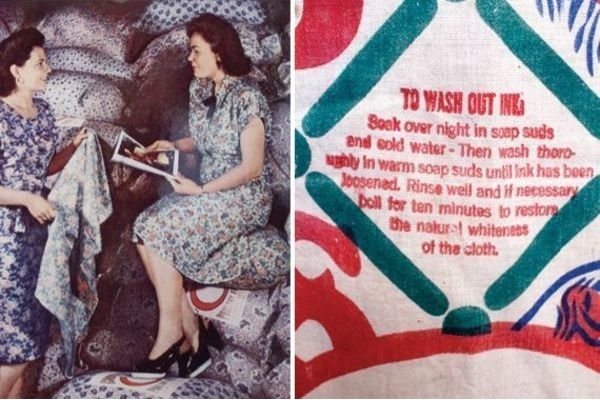
“The motto of the Depression Era was "making do" while making sure nothing was wasted and everything was re-used or recycled. This sparked families to get incredibly creative with how they handled meals, clothing, and rationed water and utilities. One of the most interesting innovations came when women began using cotton flour sacks to make dresses and shirts for their children. This trend quickly caught on and once the flour companies got word of this, they chipped in by beginning to print patterns on their bags -- and even adding color!”
This photo shows the printed flour sacks and some dresses made from them. The companies not only printed the flour sacks, but they capitalized on them and eventually started charging a little extra for the printed ones. They also gave directions on how to remove the actual labels from the sacks. You can read more about these awesome flour sacks and see more photos at https://archiveproject.com/the-amazing-history-of-flour-sack-dresses-10-photos
Other places to acquire fabric that you can use for your own sewing, are garage and estate sales. You have no idea how many people are sitting on grandma’s fabric stash and have no idea what to do with all that fabric. If you are looking for fabric, ask for it! Put a little ad in your local paper and offer to come and pick it up and haul it away. Then share it with your local quilters and seamstress groups
I will close with a saying made popular by a well-known homesteader in North Carolina. ““Use it up, wear it out, make it do, or do without.”